Business Owner's Policies (BOP) for Gig Workers: The 2026 Protection Guide
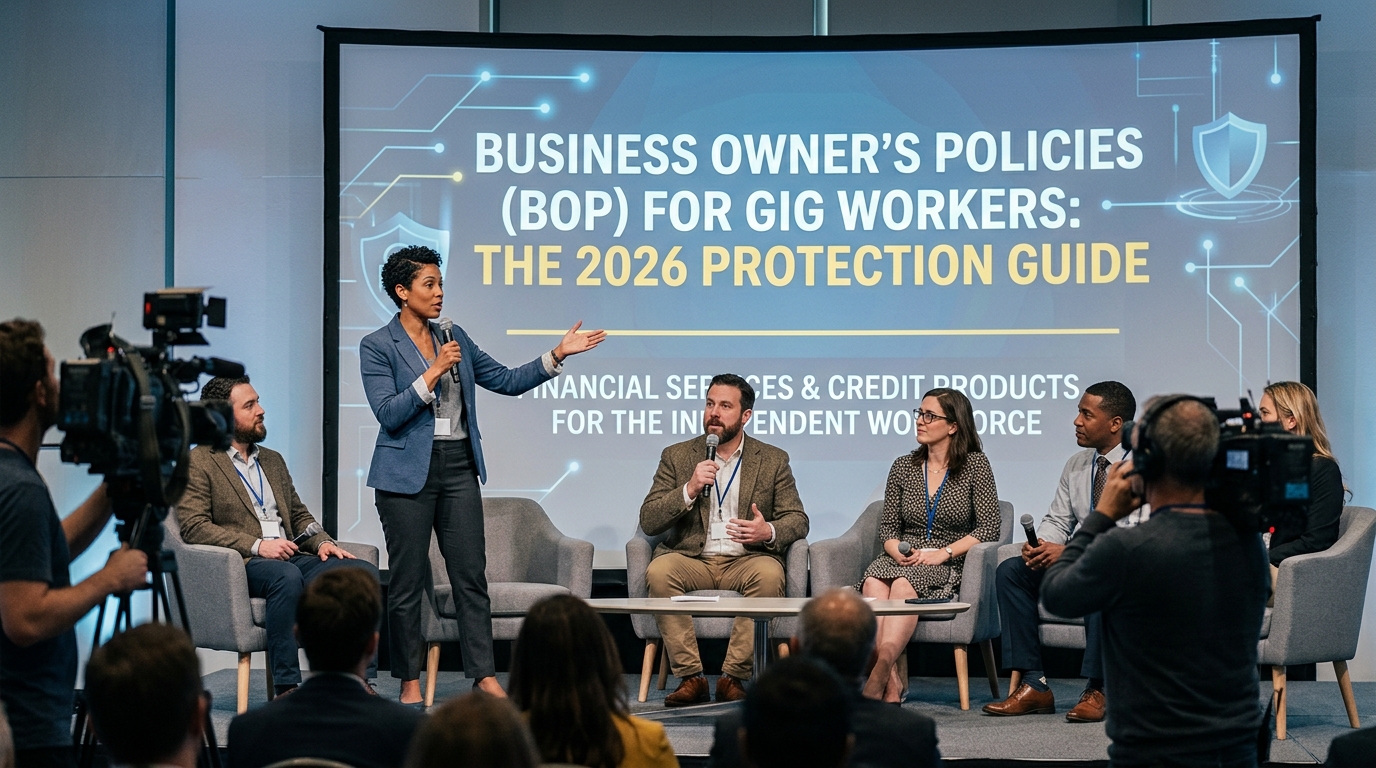
Can Gig Workers Get Business Owner's Policies (BOP) for Protection?
You can secure a Business Owner’s Policy as a gig worker if you are registered as a business entity, such as an LLC or sole proprietorship, and demonstrate active operations.
See your personalized business insurance quotes now.
Many gig workers mistakenly believe that commercial insurance is reserved for brick-and-mortar storefronts or corporations with dozens of employees. In 2026, the marketplace has shifted. Insurers now offer "micro-BOPs"—scaled-down versions of traditional Business Owner's Policies—specifically for the independent workforce. These policies bundle general liability insurance (which covers you if you damage a client's property or cause bodily injury) with business personal property coverage (which protects your laptop, camera gear, or specialized tools).
When evaluating gig worker personal loans 2026 options or managing your equipment financing, you should treat insurance as a fixed cost of doing business. A BOP is often cheaper than buying general liability and property coverage separately. For a freelance graphic designer, photographer, or consultant, a BOP provides the financial armor necessary to protect your personal assets from litigation. If a client trips over your equipment during a shoot or you accidentally spill coffee on a client's server, the general liability portion of your BOP covers the legal fees and settlements. Without it, you are personally liable, putting your high yield savings accounts for freelancers and other personal assets at risk.
How to qualify
Qualifying for a BOP is generally straightforward, but it requires you to present your "gig" as a legitimate business operation. Insurers are looking for stability and risk management, not just a side hustle.
- Register Your Business Entity: Most insurance providers will not issue a BOP to an individual using their Social Security Number. You generally need to be a registered business entity—typically a Sole Proprietorship with an EIN or an LLC. Registering is usually a low-cost process with your Secretary of State.
- Provide Proof of Operations: You must show evidence of consistent work. This can be verified through a mix of 1099 forms from the previous year, bank statements showing regular deposits from platforms like Upwork or DoorDash, or a signed client contract. If you are just starting, an active business license and a portfolio website often suffice.
- Maintain Clean Risk History: While not as stringent as a mortgage application, insurers will check your business's claims history. If you have had prior liability claims, premiums will be higher. In 2026, many carriers integrate digital underwriting tools that pull your business data instantly to verify your risk profile.
- Define Your Asset Value: To qualify for the property insurance portion, you must provide an itemized list of business equipment you want to insure. If you are an owner-operator and need heavy-duty equipment financing to build your fleet, remember that the asset you finance needs to be included in your property coverage limits.
- Hold a Current Business License: Depending on your city or state, you may be required to hold a local business license. Having this documentation ready speeds up the underwriting process significantly.
Choosing the Right Coverage Level
Deciding between coverage options often comes down to the balance between your monthly cash flow and your risk tolerance. Use this breakdown to determine your path:
Pros of a Standard BOP
- Bundled Savings: Combining general liability and property insurance into one policy is typically 10–20% cheaper than purchasing them as standalone products.
- Simplified Claims: If a single event involves both property damage and liability (e.g., a fire in your home office that damages client gear and causes building damage), dealing with one insurer is significantly faster.
- Contract Compliance: Many enterprise clients will not sign a contract with a 1099 freelancer unless they can produce a Certificate of Liability Insurance (COI), which a BOP provides.
Cons of a Standard BOP
- Coverage Limits: If you have high-value equipment (e.g., $50,000+ in production gear), a standard "off-the-shelf" BOP might have property limits that are too low, requiring expensive "riders" or endorsements.
- Inflexible Terms: These are package products. You cannot easily remove components you don't need, meaning you might pay for property coverage you don't actually use if you work entirely in the cloud.
Which is right for you? If you are a mobile worker (drivers, consultants, handymen), you are better served by a BOP that emphasizes liability. If you are an owner-operator with heavy physical gear, focus on the property coverage limits. Always check if your "best business credit cards for freelancers" offer any secondary insurance for rental cars or equipment, as this can prevent you from over-insuring.
Common Questions About Insurance for Independent Workers
Does my personal homeowner's or renter's insurance cover my gig work?: Almost never; in fact, filing a business-related claim against a personal policy often results in your insurer denying the claim and potentially canceling your personal coverage for failing to disclose business activities.
What is the difference between a BOP and professional liability?: A BOP covers bodily injury and property damage (the "slip and fall" stuff), whereas professional liability (also known as E&O insurance) covers negligence, mistakes, or failure to deliver services as promised in your contract.
Can I get a BOP if I have bad credit?: Most business insurance carriers are more concerned with your claims history and industry risk than your personal credit score, though some insurers may run a soft credit pull to determine your eligibility for monthly installment plans.
Background: The Role of Insurance in Gig Financial Health
Financial planning for self-employed 2026 requires a shift in mindset: you are not just an employee; you are the risk manager of your own corporation. In the traditional employment model, the employer absorbs the cost of liability insurance, worker's compensation, and property damage. When you transition to the gig economy, you inherit these costs. A Business Owner’s Policy is the financial tool that transfers this risk back to an insurance carrier.
Insurance is the backbone of your business's longevity. Without it, one bad accident can wipe out your business savings or force you into high-interest debt consolidation for contractors to cover legal fees. According to the Small Business Administration, nearly 30% of small businesses fail due to undercapitalization or unexpected financial shocks, which includes uninsured liability events. By securing a BOP, you ensure that a single disaster does not become a business-ending event.
Furthermore, the landscape of gig work is evolving. As more independent contractors move into specialized fields—such as logistics, consulting, or high-end creative production—the need for robust insurance is rising. According to data from the Federal Reserve, the gig economy has seen consistent year-over-year growth in 2026, yet the number of independent workers who lack even basic business insurance remains high. Many workers assume their personal credit card or bank's protections cover business liabilities, which is rarely the case.
When you separate your personal finances from your business risks, you create a buffer. This is similar to how you would manage restaurant equipment financing options for a food truck venture; you ring-fence your risks so that your personal income remains insulated from business-related catastrophes. A BOP is, at its core, a defensive financial asset. It allows you to bid for larger contracts, rent studio space, or work on-site at high-profile locations with the confidence that you are protected.
Bottom line
A Business Owner's Policy is an essential safety net for any serious gig worker looking to shield their personal assets from business-related liabilities. Secure your policy today to ensure your freelance career can withstand unexpected accidents and legal challenges.
Disclosures
This content is for educational purposes only and is not financial advice. thegig.news may receive compensation from partner lenders, which may influence which products are featured. Rates, terms, and availability vary by lender and applicant qualifications.
Ready to check your rate?
Pre-qualifying takes 2 minutes and won't affect your credit score.
See if you qualify →Frequently asked questions
What is a BOP for gig workers?
A Business Owner's Policy (BOP) is a bundled insurance package that typically combines general liability and property insurance into one affordable plan, specifically designed for small business owners like freelancers.
Do I need a BOP if I am a 1099 contractor?
If you own significant equipment, visit client sites, or want to protect yourself against lawsuits, a BOP is essential. Many contracts also require proof of liability coverage.
Is a BOP expensive for freelancers in 2026?
Most gig worker BOPs start between $300 and $800 annually, depending on your industry risk level, but costs vary based on your specific equipment and liability exposure.